 महेन्द्र मुस्कान मगर
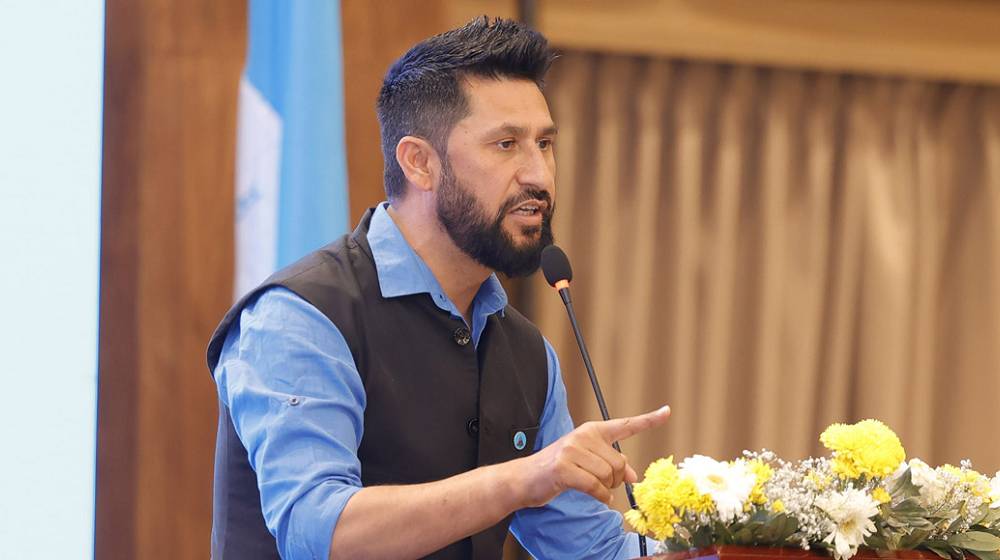
Rastriya Swatantra Party chairman Rabi Lamichhane arrived in New Delhi on Monday for a five-day official visit to India, and has called for a fundamental shift in Nepal-India relations — away from geopolitical disputes and toward what he terms “development diplomacy.” In an opinion piece published Tuesday in the Hindustan Times, Lamichhane argued that issues like border disputes should not be allowed to drag on indefinitely, and must instead be resolved through dialogue grounded in historical facts and mutual understanding.
yper-nationalist rhetoric on both sides is counterproductive. Disputes must be resolved through evidence, historical facts, and shared understanding — not prolonged for political convenience.”
Lamichhane proposed that diplomatic missions be transformed from political contact points into engines of investment, trade, and economic cooperation. He called for India to become a central pillar of Nepal’s economic transformation, citing India’s own rise as an example worth both respecting and partnering with.
The centerpiece of his economic vision is the proposed Raxaul–Kathmandu railway. Noting that India currently builds nearly 15 kilometers of railway per day, Lamichhane pointed out that the proposed line is under 150 kilometers — a relatively modest ask with transformative potential.
“The day those 150 kilometers are connected, it will bring revolutionary change to trade, tourism, freight, and regional connectivity. Nepal does not merely want to connect borders; it wants these railways to drive the entire economy.”
On cultural ties, Lamichhane invoked shared civilizational heritage — Janakpur and Ayodhya, Pashupatinath and Kedarnath, Lumbini and Bodh Gaya — arguing that Nepal and India are not simply two neighboring states, but partners in an ancient and shared civilization.
“Nepal and India are not merely two countries. We are partners in a glorious and ancient civilization. The story of Ram is complete only when Janakpur and Ayodhya are joined.”
He also called for direct flights from Pokhara and Lumbini to Indian cities including Delhi, Mumbai, and Bengaluru, and floated the concept of a “Kathmandu–Bengaluru Digital Corridor” as a new frontier for bilateral cooperation. Sports was also mentioned as a potential area of collaboration.
On the domestic front, Lamichhane framed the RSP’s rise as a “ballot box revolution” — a generational shift that has brought good governance and direct accountability to the center of Nepal’s political agenda. He described today’s Nepal as a country moving not toward an uncertain destination, but on an ambitious journey toward a prosperous and vibrant democracy.

प्रतिक्रिया दिनुहोस्